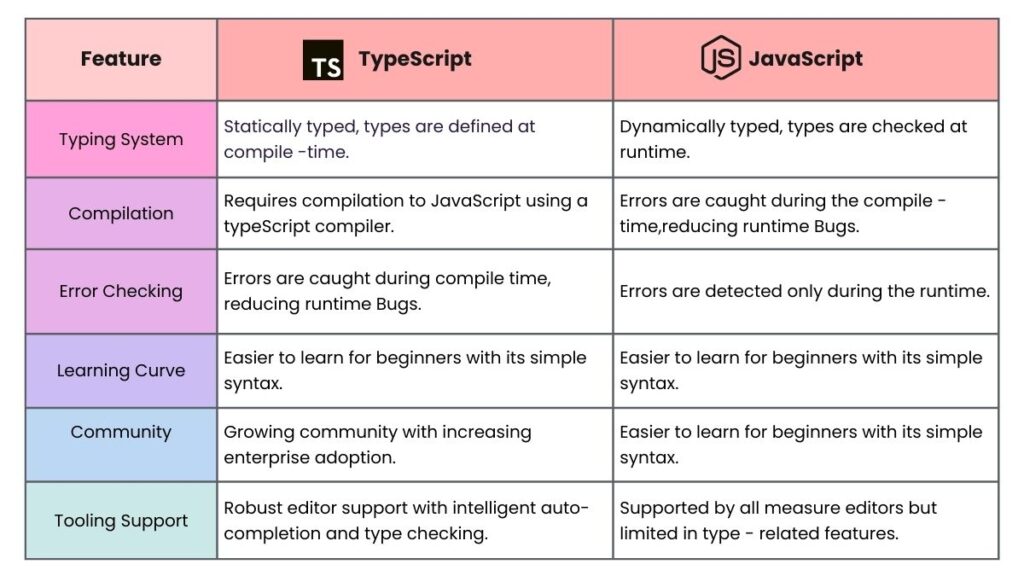
Difference between TypeScript and JavaScript Benefits JavaScript Simple to learn and widely used in web development No compilation step; runs directly in browsers or node.js. Supported by an extensive ecosystem of libraries and frameworks. Offers flexibility with dynamic typing, enabling rapid development. TypeScript Offers static typing, improving code reliability and reducing runtime errors. Includes advanced features like interfaces, generics, and decorators for scalable development. Better tooling support with enhanced code navigation, auto - completion, and refactoring. Helps maintain large codebases, making it easier for teams to collaborate. When to Use JavaScript For small-scale projects or prototypes When working with legacy codebases or teams already familiar with JavaScript. For dynamic, client-side applications requiring minimal configuration. TypeScript For large-scale or enterprise projects where scalability and maintainability are priorities. When working in teams where type safety ensures fewer bugs and smoother collaboration. For applications requiring a strong focus on long-term code quality and readability. Performance Comparison JavaScript Faster to write and execute because it does not require compilation. Can be slower at runtime due to potential type-related errors and debugging overhead. TypeScript Development is slightly slower due to the need for type annotations and compilation. Results in more reliable and optimized runtime performance due to fewer bugs and better code structure. Share